Start with the life you want back
Tell us what has become hard and what you need the chair to help you do. No medical records are needed to find the first step.

Start with the life you want to live, not a product code. Then see what may need to happen next, from the evaluation and fitting to the paperwork and coverage questions.
The paperwork matters. The person matters more. Care begins by listening to what everyday life needs to look like, then helping make the next step understandable.
The person who needs a chair, the daughter helping a parent, the clinician making a referral, and the customer who needs service should not have to start in the same place.
Tell us what has become hard and what you need the chair to help you do. No medical records are needed to find the first step.
Check the order, notes, evaluation, and secure referral path before missing paperwork slows things down.
Start with the people who need help, where they live, the equipment involved, and what each side must own.
Call about urgent or routine repair without having to explain everything from the beginning.
The chair matters because of the life it makes possible. Get the chair right, then make the evaluation and paperwork support that life.
The process has enough paperwork. It does not need more mystery. The exact steps depend on the person, the equipment, the payer, and the documentation, but the next step should be clear.
What do you need to do again at home, with family, or out in the world?
This step should check the equipment type, location, timing, coverage questions, and whether an evaluation may be needed.
A complete process should coordinate the order, notes, assessment, and supporting records.
Depending on the equipment and need, the process may include setup, training, service, and follow-up.
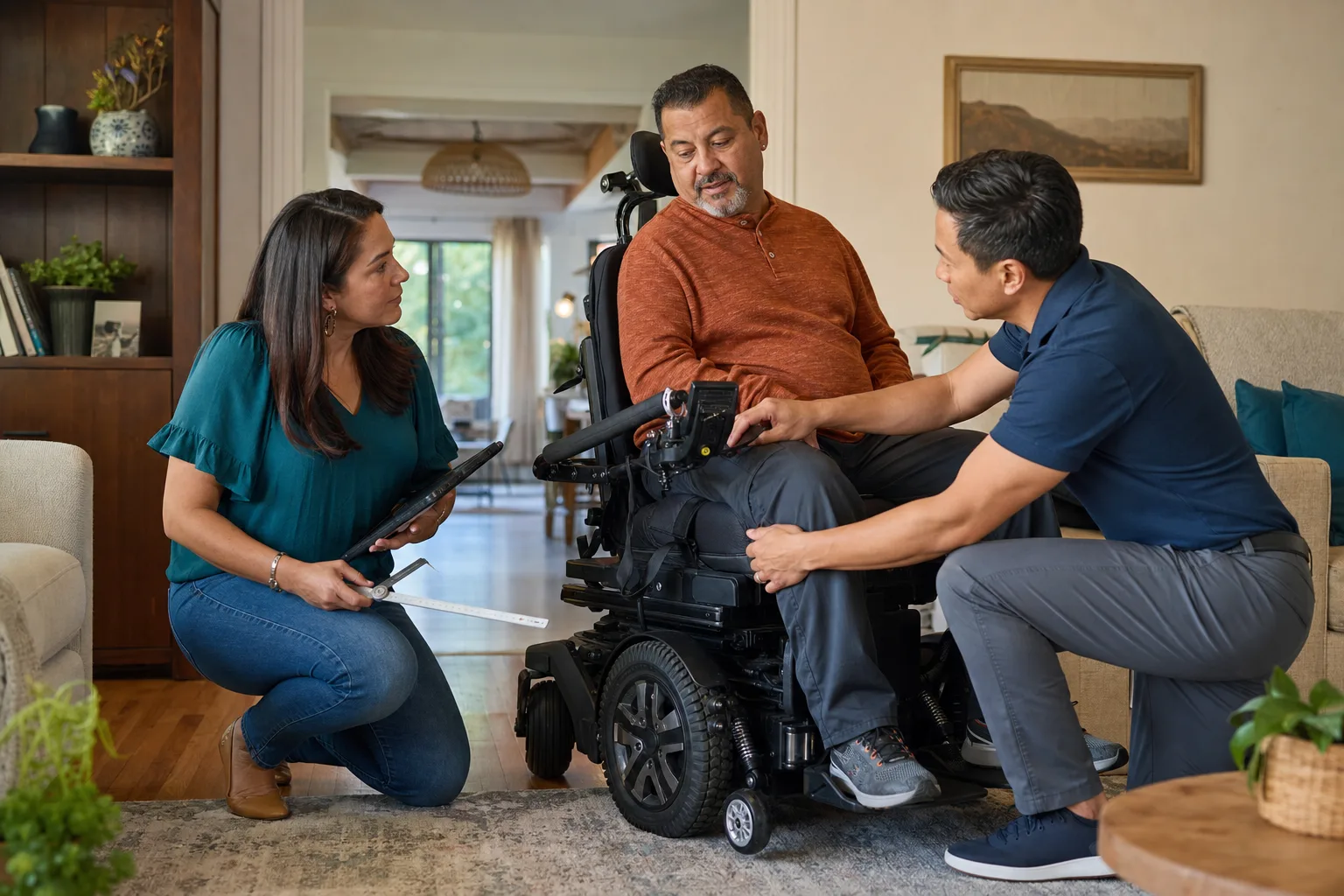
A form cannot replace clinical judgment. A good referral process can make the next step clear, flag missing records early, and show who needs to follow up.
A chair that is not working can shrink someone’s world immediately. People should know who to call, what is urgent, and what happens next.
Call about service and have the make and model available if possible. If the equipment feels unsafe, say that first when you call.
Call 760-599-8800You do not need to become an equipment expert before asking for help. Choose the kind of help you need, and this private guide will point toward the next conversation.